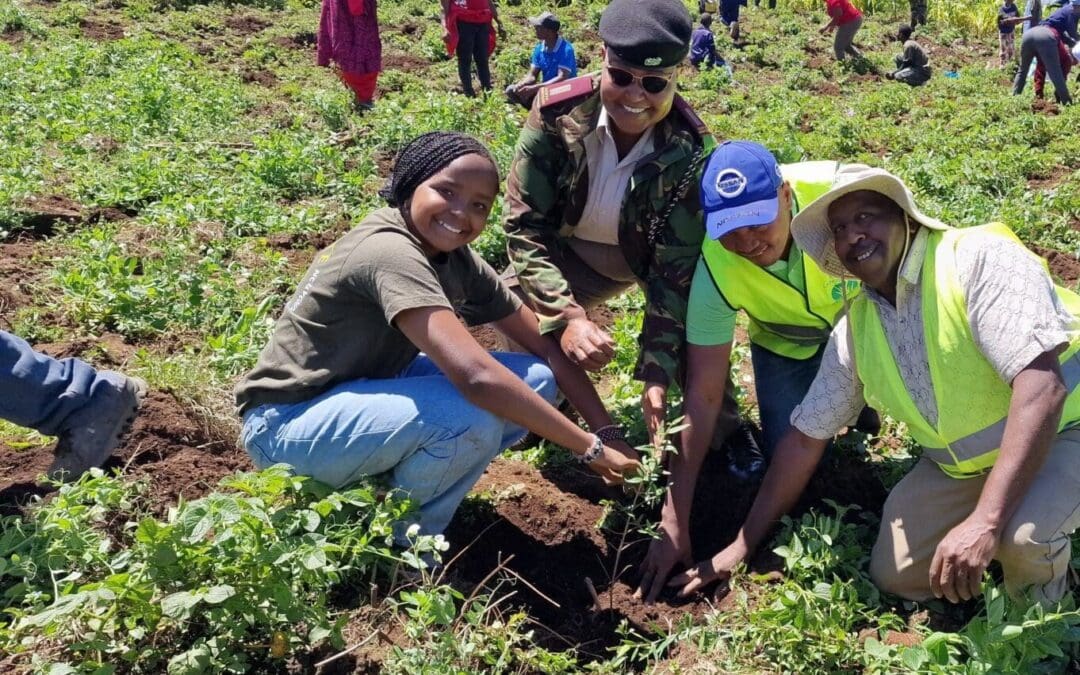
In May 2026, the Karen Forte Foundation successfully completed the planting of 22,222 indigenous trees across their 50 acres of land, representing a significant milestone in its ongoing environmental restoration and reforestation programme.
The planting programme incorporated six indigenous tree species selected for their ecological value and suitability to the restoration objectives. These included East African cedar (Juniperus procera), podocarpus (Podocarpus spp.), olea (Olea spp.), croton (Croton spp.), Cessidium (Cessidium spp.), and Wabugya (Prunus africana).
Following the initial establishment period, the trees recorded an overall survival rate of 90.2%, compared with the anticipated target of 95%. Although slightly below the projected rate, the results demonstrate a strong level of establishment and provide a valuable baseline for evaluating the effectiveness of the restoration programme.
The principal factors contributing to mortality and reduced establishment were identified as poor soil quality and inadequate rainfall during the establishment period. These environmental constraints affected the ability of some species to establish effectively and maintain adequate moisture levels.
Based on the findings, the Foundation recommends replacing underperforming species with better-adapted indigenous species where appropriate, together with improvements to planting techniques and site preparation. Additional measures should include enhanced soil preparation, improved water-retention practices, appropriate species-site matching, and closer monitoring during the critical early stages of establishment.
The lessons learned from this planting cycle will inform future restoration activities and contribute to improving tree survival rates, ecological resilience, and the long-term sustainability of the Foundation's reforestation efforts.